Today’s Riddle is…

On the last night of the year,
while fireworks light the sky in many countries,
Japanese people quietly eat a bowl of soba.
Why soba?
Why not a feast, or something sweet?
What is hidden in this simple bowl at the edge of the year?
What It Really Means
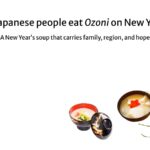
New Year’s Eve soba is called Toshikoshi Soba.
Literally, “year-crossing noodles.”
This meal is not about celebration.
It is about transition.
Soba carries several symbolic meanings:
-
Long noodles → wishing for a long life
-
Easy to cut → letting go of hardship and bad luck
-
Simple ingredients → returning to modesty
-
Warm broth → closing the year gently
It is not a feast to start something new.
It is a bowl to end something quietly.
In Everyday Japan
On December 31st, you’ll see:
-
families eating soba at home
-
people standing at soba shops just before midnight
-
convenience stores selling “last soba of the year”
-
TV shows counting down while bowls are being prepared
Some eat it early in the evening.
Some eat it minutes before midnight.
Some even eat it alone.
There is no strict rule.
Only one shared feeling:
“Let this year end without noise.”
Why It Confuses Foreigners
Many visitors ask:
-
“Why noodles at such an important moment?”
-
“Is it religious?”
-
“Why so quiet?”
In many cultures, the new year is about starting strong.
In Japan, the focus is often on ending gently.
Toshikoshi soba is not about excitement.
It is about closure.
Ridley & Nazonazo-san

“New Year’s Eve feels so… calm here.
Why eat such a simple meal at the end of the year?”
“When you close a sliding door,
do you slam it?”

“No… you slide it quietly.”
“A year is the same.
Soba is the sound of a door closing gently.”

“So it’s not about luck only?”
“Luck may come.
But first, one must finish what has passed.”
A Quiet Ending
Japanese New Year does not begin with noise.
It begins after silence.
A bowl of soba is not a celebration.
It is a pause.
And in that pause,
a new year quietly arrives.