Today’s Riddle is…

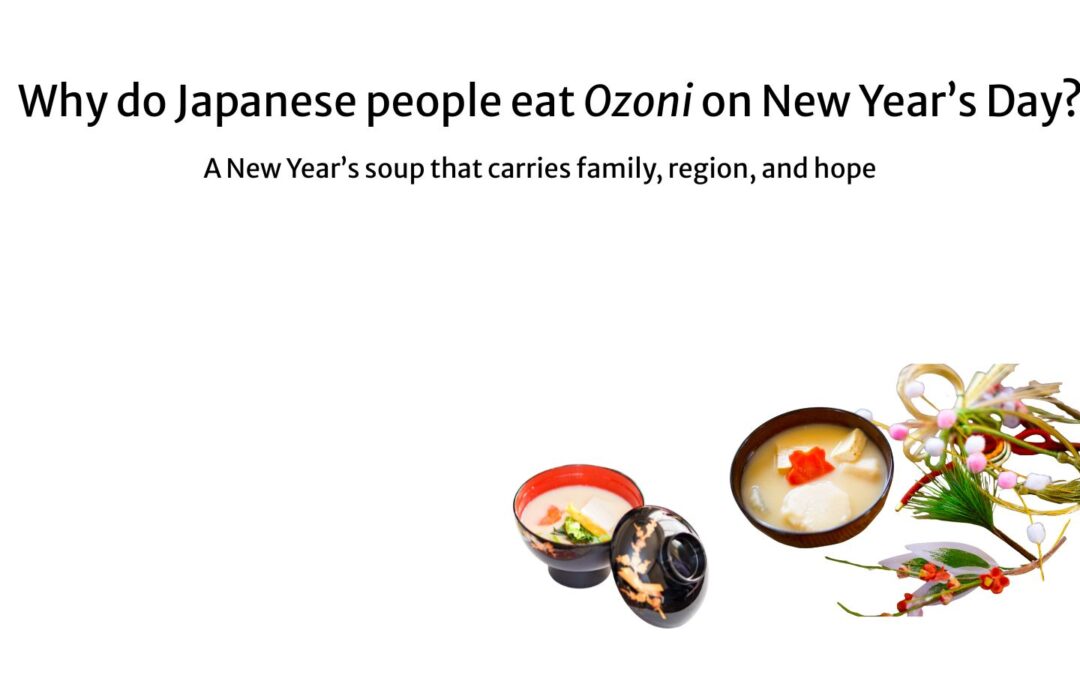
On New Year’s morning in Japan, many families eat a warm soup called ozoni.
It looks simple—clear broth, vegetables, and a piece of mochi—but no two bowls are exactly the same.
Some have clear soup, others miso.
Some use chicken, others fish.
The shapes of the mochi even change from region to region.
So here’s the riddle:
Why do Japanese people eat ozoni on New Year’s Day—and why does it look so different in every home?
Ridley & Nazonazo-san

“I thought New Year’s food would be standardized… but ozoni feels very personal. Everyone’s bowl is different.”

“That is because ozoni is not just food.
It is a greeting—to the year, to the gods, and to one’s home.”
What Is Ozoni?
Ozoni is a traditional Japanese soup eaten on New Year’s Day (January 1st).
Its key ingredient is mochi, a rice cake made from pounded glutinous rice.
The rest depends on the family:
-
Clear broth or miso
-
Chicken, fish, or seafood
-
Local vegetables
-
Square or round mochi
There is no single “correct” ozoni.
And that’s the point.
The Role of Mochi: Inviting the New Year’s Spirit
At the heart of ozoni is mochi, which has a deep symbolic meaning.
In traditional belief, the New Year is welcomed by Toshigami, a deity who brings:
-
Health
-
Good harvest
-
Longevity
Mochi was believed to be a vessel for divine energy.
By eating mochi in ozoni, people symbolically receive the blessing of the new year into their bodies.
“We do not just eat mochi.
We welcome the year by sharing it.”
Why Every Ozoni Is Different
Unlike many formal traditions, ozoni was never strictly standardized.
Why?
Because it reflects:
-
Regional ingredients
-
Family history
-
Local climate and culture
In other words, ozoni answers this quiet question:
“Where do you come from?”
A person’s ozoni often reveals their hometown before they say a word.

“So ozoni is like a family accent… but edible.”
“Exactly. It speaks without explaining.”
Ozoni as a Gentle Beginning
New Year’s Day in Japan is meant to begin slowly and quietly.
Ozoni is:
-
Warm
-
Simple
-
Easy to digest
After the busy preparations of the year-end, ozoni gently resets the body and mind.
It is not celebratory food.
It is grounding food.
More Than a Recipe
Ozoni is not written in stone.
It is passed down by memory.
Families don’t ask:
-
“Is this authentic?”
They ask: -
“Is this how we’ve always made it?”
That continuity is the real tradition.
The Answer to the Riddle
Japanese people eat ozoni on New Year’s Day because:
-
It welcomes the spirit of the new year
-
It carries blessings through mochi
-
It honors family and regional identity
-
It begins the year quietly, together
Ozoni doesn’t try to impress.
It simply says:
“Welcome back. A new year has begun.”