Today’s Riddle is…

Visitors often notice it immediately.
Rush hour trains packed with people—
yet no loud phone calls,
no shouting across seats,
no music leaking from headphones.
In many countries, public transport is noisy by nature.
So why, in Japan, does silence seem to flow naturally?
Is it politeness?
Discipline?
Or something more subtle?
What It Looks Like
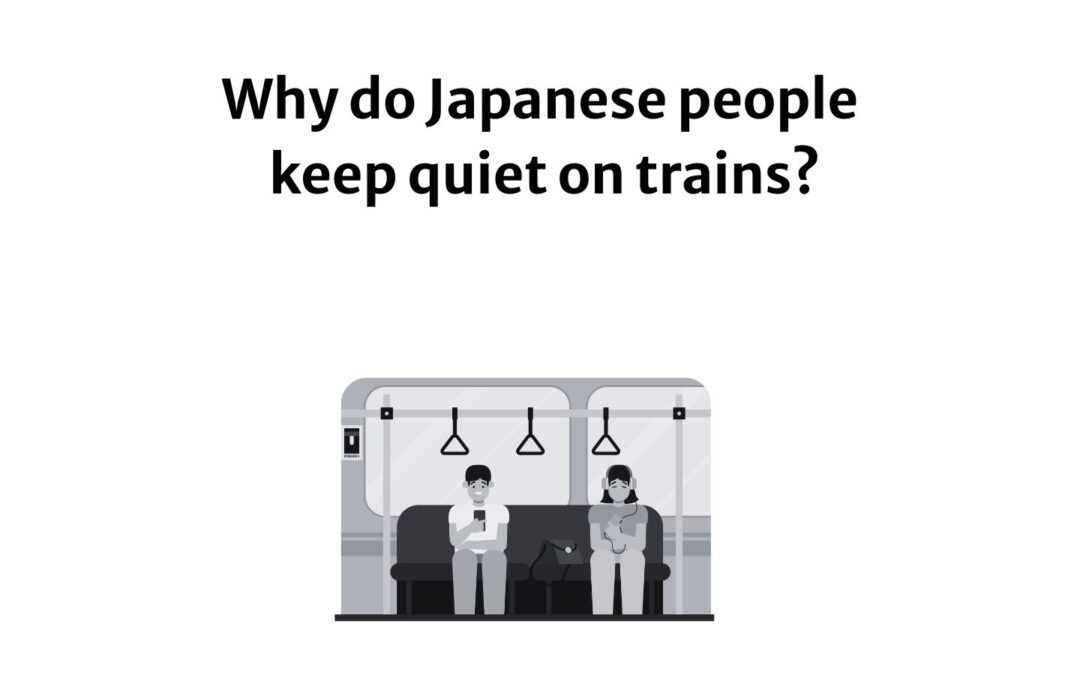
On Japanese trains, people usually:
-
keep phone calls to a minimum
-
speak softly, if at all
-
silence their phones automatically
-
avoid drawing attention to themselves
-
use the time to sleep, read, or simply exist quietly
There are signs asking passengers to be considerate—but even without them, the behavior remains.
The quiet feels… voluntary.
What It Really Means
The silence on Japanese trains is not about rules.
It’s about shared space.
In Japan, public space is not “no one’s space.”
It is everyone’s space.
Sound is seen as something that spreads—
and once it spreads, it cannot be taken back.
So silence becomes a form of respect.
Not respect toward authority,
but respect toward the invisible comfort of others.
The Role of “Kuuki” (Reading the Air)
Japanese society places great value on kuuki wo yomu—
“reading the air.”
On a train, the “air” says:
-
people are tired
-
people want a moment of rest
-
this space is temporary, but shared
Speaking loudly would disturb that unspoken agreement.
So people adjust themselves, quietly.
No confrontation.
No enforcement.
Just mutual awareness.
Why Phone Calls Feel Especially Wrong
Talking on the phone is different from talking to someone beside you.
A phone call brings an outside world into a closed space.
It breaks the shared atmosphere.
That’s why phone calls feel more disruptive than quiet conversation.
It’s not the volume alone—it’s the intrusion.
Ridley & Nazonazo-san

“Everyone is so quiet… even when the train is full.
Aren’t people bored?”

“Silence is not emptiness.”
“Then what is it?”
“It is space—
left open so others can rest.”

“So the quiet is kindness?”
“Sometimes, the kindest thing is to leave no trace.”
A Cultural Note for Visitors
If you’re visiting Japan:
-
You don’t need to be perfectly silent
-
You don’t need to feel nervous
-
Just notice the atmosphere—and follow it
When you lower your voice,
you’re not obeying a rule.
You’re participating in a shared understanding.
The Quiet Truth
Japanese trains are quiet not because people are controlled—
but because people are considerate by default.
The silence is not strict.
It is gentle.
And once you feel it,
you may start to miss it elsewhere.