Today’s Riddle is…

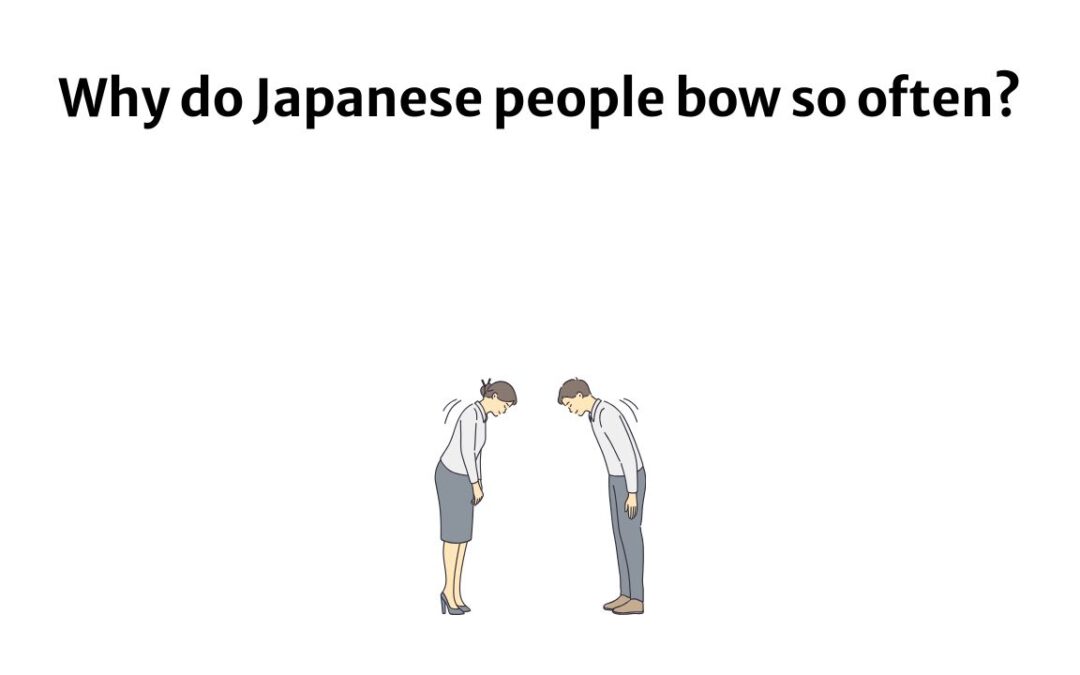
Why do Japanese people bow so often?
When meeting, thanking, apologizing, or even speaking on the phone—
their bodies move before their words do.
Is it just politeness, or is something deeper being expressed?
What It Really Means
Bowing in Japan is not simply a greeting.
It is a physical expression of inner attitude.
An action that shows:
-
respect
-
humility
-
gratitude
-
apology
-
acknowledgment of the other person
Instead of asserting oneself with words,
the body lowers first.
In Japanese culture,
lowering the body is a way of lifting the other person.
In Everyday Japan
You’ll see bowing everywhere:
-
at store entrances
-
between coworkers
-
on trains when staff apologize for delays
-
during phone calls (even when unseen)
-
at temples, shrines, and schools
-
before and after meetings
Sometimes the bow is deep.
Sometimes it’s barely noticeable.
But each bow quietly adjusts the distance between people.
Why It Confuses Foreigners
In many cultures:
-
confidence is shown by eye contact
-
equality is expressed by standing straight
-
words carry most of the meaning
So bowing can feel excessive or submissive.
But in Japan, bowing is not about lowering one’s value.
It is about softening the space between two people.
It says:
“I am aware of you.”
“I recognize where we stand.”
Without needing to explain.
Ridley & Nazonazo

“Why do people bow even when no one can see them?
Like on the phone?”

“When the heart bows, the body follows.”
“So it’s not for the other person?”
“Sometimes it is.
Sometimes it is for oneself—
to remember where one stands.”
“Bowing is… a way to reset the space?”
“Aye.
A bow is a quiet adjustment of distance.
Neither too close, nor too far.”
Cultural Insight
In Japan, personal space is often described as
“the distance where soup does not cool”
(soup-cooling distance).
Bowing helps maintain this invisible balance—
a respectful closeness without intrusion.
Closing Thought
Words can misunderstand.
Bodies rarely do.
A bow is not an old custom.
It is a living language—
spoken without sound.